EDT, EDP, and Extrait: The Anatomy of a Concentration
Sometimes 3 letters in the world of perfumes can tell us more about the anatomy of a scent. EDT, EDP, and Extrait: these are important characteristics that many people perceive as a simple intensity scale, but if you're a true connoisseur, that explanation sounds a bit superficial.
Concentration is a subtle mechanism that determines how a fragrance "unfolds," sets the pace of evaporation, changes the depth of the base, and even influences the psychological feel of wearing it. An airy composition can be light and sparkling in EDT, balanced in EDP, and intimate in Extrait.
These aspects can be seen as different interpretations of the same olfactory idea. If you want to learn more about the science behind all this, stay with us a little longer. A good choice comes with more awareness and a high-quality product selection from Elinor.bg's online platform.
EDT (Eau de Toilette): The Architecture of Air
Typically, this concentration of perfume is enriched with 5 to 15% aromatic oils. Alongside this, it also contains a higher amount of alcohol, which means faster evaporation, more pronounced top notes, and a more dynamic opening.
This type of concentration is usually found in women's perfumes with citrus accords. What you notice as it develops on the skin is a bright and sparkling start, a quicker transition into the heart of the fragrance, and a lighter final base.
This type of concentration works best in warmer weather, for perfumes meant for everyday wear, and in situations where you don't want the scent to be too overwhelming.
Skin and Temperature Have Their Say
The same EDT can behave completely differently on dry versus oily skin. Sebum acts as a natural fixative: on oilier skin, the fragrance lasts longer, even in this light concentration. Temperature is also a decisive factor: above 25°C, alcohol evaporation speeds up noticeably, which means shorter longevity but a stronger opening. That's why EDT is the concentration most sensitive to its environment, and it's worth keeping in mind when choosing a fragrance for the season.
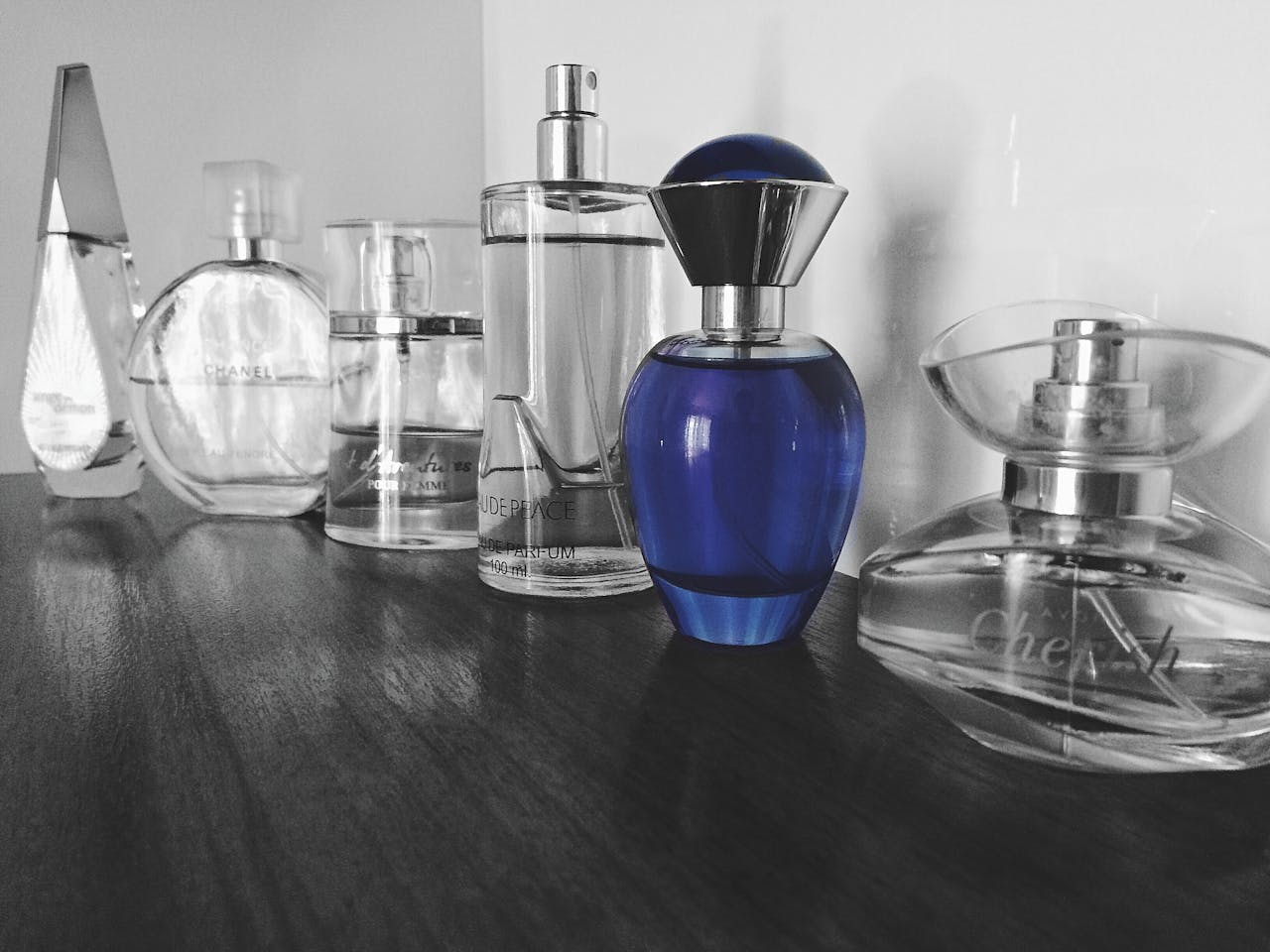
EDP (Eau de Parfum): A Balance Worth Having
This concentration serves as the "golden mean," which is why it's the most widespread and most sought after. It sits between the airy lightness of EDT and the intimacy of Extrait, as a deliberate choice by the perfumer.
Here, the composition gains volume, density, and depth, with an aromatic oil concentration of 15 to 20% and a lower percentage of alcohol. This means slower evaporation, a more stable release of the heart and base notes, and of course, longer-lasting wear.
Concentration alone, however, isn't enough: the proportion of notes matters just as much. EDPs often feature enhanced amber accords, vanilla, tonka bean extract, woody and resinous bases, and musk structures, notes typical of Arabic perfumes. Applied to the skin, the scent doesn't burst out sharply or evaporate quickly; it often lingers softly and gently, breathing for hours.
It's important to note here that a higher concentration of perfume doesn't mean it's overpowering. It creates a fragrant cloud that is noticeable but not suffocating, expressive without being aggressive.
These are the scents for formal, long-awaited events, romantic evenings, and professional presence.
Sillage vs. Projection
In perfumery terminology, projection refers to the distance at which the scent can be noticed around you as you move, while sillage is the trail you leave behind. With EDT, projection is good, but the sillage is short-lived. With Extrait, it's the opposite: the fragrance is intimate and deep, but doesn't "radiate" outward. EDP is the concentration where these two parameters find balance, offering enough presence in a room without overwhelming the space. That's exactly why it's the preferred format for formal and crowded occasions.
Extrait de Parfum: The Weakness of Niche Perfumery
This is the most concentrated and most luxurious form of a fragrance. Its aromatic oil content often ranges between 20 and 40%, and in some niche perfumes, it can even be higher.
What do we mean by "higher concentration"? It means less alcohol, slower evaporation, a smoother unfolding of the different olfactory nuances of the fragrance pyramid, and a more oily texture.
What changes with Extrait de Parfum is the balance of the notes: the top notes are soft, the heart is rich, and the base dominates. The feel is velvety and creamy, unfolding slowly and gradually spreading across the skin.
Perfumers often enhance Extraits with woody bases, musk, and gourmand accents, a profile particularly characteristic of men's perfumes. Its longevity can last from 8 to 12 hours, during which it melts and transforms on the skin in various fragrant ways.
Extrait allows for a richer content of natural raw materials, a more complex and elaborate construction, and naturally, fewer compromises from alcohol dilution. Its production process is more expensive, but the investment is definitely worth it for the sake of a deeper experience.
Less Is More
A common mistake with Extrait is applying it in the same amount as EDT. Because of its oily texture and low alcohol content, applying too much doesn't intensify the scent; on the contrary, it smothers the top notes and prevents them from developing properly. It's also important not to rub the skin after applying: rubbing damages the molecular structure of the top notes and shortens the fragrance's lifespan. One or two touches on pulse points are entirely enough for a full 10-hour experience.
Natural Raw Materials Win: EDT, EDP, and Extrait
With low alcohol dilution, the perfumer has the real opportunity to include a higher proportion of natural extracts, such as rose oil, oud, jasmine absolute, and ambergris: raw materials whose aromatic molecules are unstable in a high-alcohol environment and degrade quickly.
This is precisely the main reason behind the higher price of Extrait formats: not just the concentration, but the quality and origin of the raw materials used. In niche perfumery, this distinction is especially noticeable.
Which Concentration Is Right for You?
Choosing between EDT, EDP, and Extrait isn't a matter of budget or intensity: it's a matter of context, skin, and intention. If you're looking for a light everyday scent, EDT will give you freshness without commitment. If you want a fragrance that represents you at work, on a date, at an event, EDP is the format with the best balance between presence and subtlety.
If perfume is a personal experience for you rather than a public statement, Extrait is where the fragrance becomes something truly your own. Explore the full collection at Elinor.bg and find your concentration.